It was a coincidence that on becoming aware of the existence of this delightful account of a Brit crossing the channel to start a new chapter in life, I should be coincidentally embarking on a journey of my own with many curious parallels. There were, however, a few key differences. Firstly, although I was indeed also crossing the channel, I was going to be ending up in Paris rather than the South of France. Secondly, my situation in life was quite different – I wasn’t approaching retirement, self-inflicted or otherwise. Thirdly, I was making this voyage in the 21st century rather than the 20th, which detracted somewhat from the nostalgic romanticism. I’m sure there are many more distinctions to draw. But apart from that, wasn’t I doing the same thing? Well, maybe not exactly, on reflection… Perhaps I wasn’t going to be spending my time in the beautiful countryside and quaint villages of Provence itself, and I wouldn’t be treated to the daily delights of the Provençal accent offering me paing (otherwise known as pain, for bread), but I would at the very least be closer than I was to the fabled South. What better a time to whet my appetite for French life and culture, and what better a book to do it with?
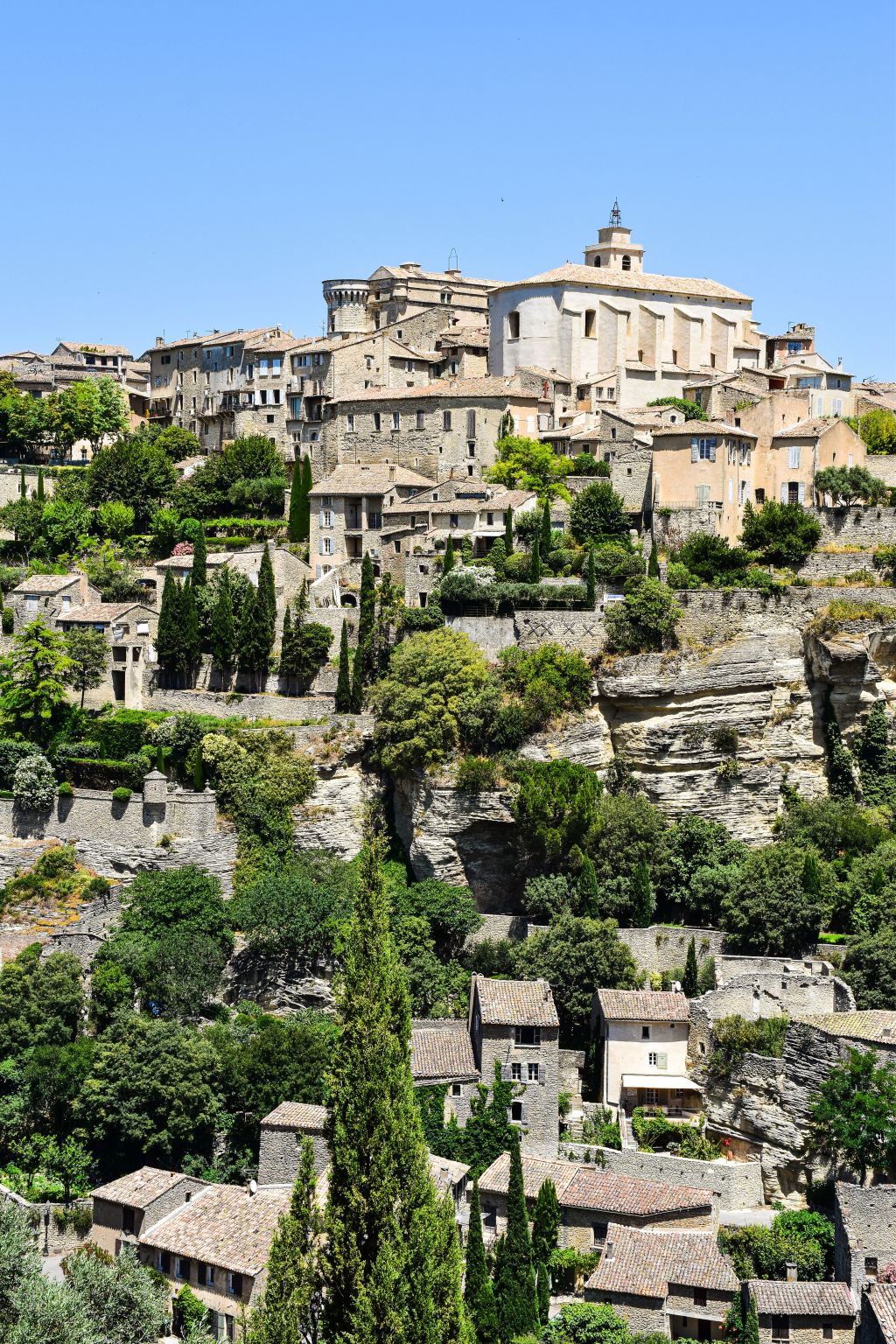
In A Year in Provence, Peter Mayle paints a picture of a year spent embarking on a new life in a freshly acquired farmhouse in the Lubéron Valley. The memoir recounts the joys, strife, and oddities of the experience of he and his wife – an English couple – in full colour vision. In the book, Mayle humorously relates the daily life in this hazy alternative reality. Though perhaps daily is the wrong word. As Mayle himself writes – “we were learning to think in seasons instead of days or weeks”). A life filled to the brim with all sorts of unique happenings and characters particular to that little spot of space and time.
There is Faustin, the ever-enduring neighbour, who helps educate the couple on how they should manage their sizeable vineyard; Massot, a man who has a hatred of nearly everything and anyone who he catches whiff of in the air near his property – especially German campers, who he seems to think can be deterred from setting up their tents by threat of landmine; and the drole description of the variously chaotic, fragile, and gregarious visitors that descend upon the happy couple, often at invitations of their own making. Then of course there is Monsieur Venicucci and the phalanx of builders, craftsmen, and workers who grace the couple’s new property just as often, with a taste for erratic and intense invasion, operating according to Provençal notions of regularity and time, whose gears seem to be tuned to the mercy of the biting Mistral wind or the intensity of the sun on any given day (“Provence has been accurately described as a cold country with a high rate of sunshine”). This is excepting of course when they turn their sundials back to Greenwich at the promise of a party celebrating the anticipated completion of their work, namely due to the promise of pizza, truffle, and champagne.
Indeed, a sizeable portion of the book revolves around food. The pages are garnished with vivid descriptions of glorious, homecooked meals, with fresh ingredients packed into colourful dishes, beautiful local wines, and the sacred lunch hour(s) with their mysterious effect on the Provençaux. It does seem that the Provençal stomach is the body’s internal Swiss watch.
Mayle’s writing and perspective captures the essence of light-hearted slowness and sun-baked life in the French region. It’s a joy to read about his and his wife’s delight, surprise, and occasional gaping horror as their English sensibilities are plunged into this rich bouillabaisse of novel experiences. I do hope that some of the Provence of the novel still survives today. In a world that is becoming ever increasingly connected, we are able to travel further and faster than ever before. But with that ease and convenience comes a diffusion of the unique character of places and cultures. There is solace however in the fact that, preserved in these words and pages, the Provence of yesteryear that is still holding somewhat fast against the commercial creep of curious tourists, lives on. Even at the time of writing, the Parisians were already routinely descending upon the region in their thousands in the Summer, let alone the nations of the world at large, and indeed the thousands of Britons who Mayle’s memoir motivated to make a pilgrimage of their own. It got so bad that Mayle himself was later forced to flee the place he had come to love so much, a victim of the success of his own novel. In revealing his observations of the idiosyncratic beauty of his experience there, he may have collapsed the fragile wave function forever. It is pleasing to hear, however, that he did return to spend his final years in the place he loved. I hope that one day I can visit to experience just a small pocket of the beauty and character recounted in A Year in Provence. And if that proves never to happen, this book shall still be there to console me. I will no doubt read the sequel (Toujours Provence) to be able to eat, marvel, and laugh alongside them as Mayle recounts yet more glorious tales of a different world, which I can savour at a Provençal pace.





Leave a Reply